
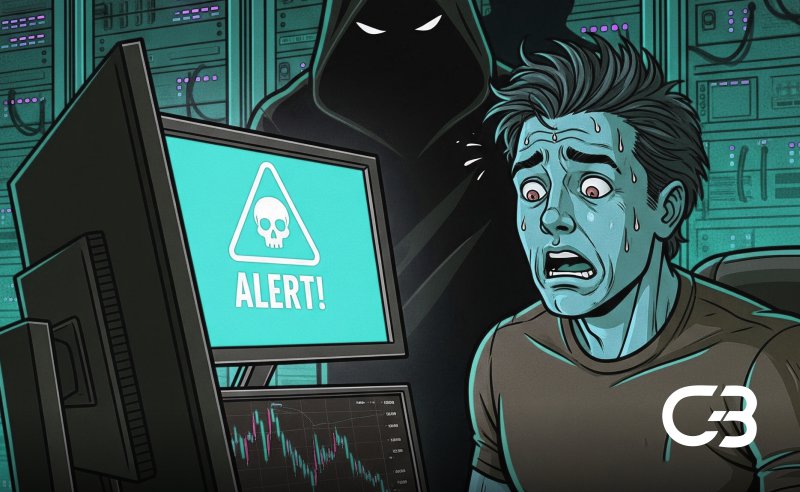
Cryptojacking is an emerging threat to entities and people. It is where hackers rustle the processing capabilities of devices and use it as a mining farm to mine cryptocurrency on their behalf. Cryptojacking, in contrast to other hacks that entail the theft of personal data, is a virtually imperceptible act that causes the system to perform worse, use more energy, and even cause the specific hardware to malfunction. A critical component of the online world is knowing how to prevent cryptojacking, which can have a complicated nature.
What Is Cryptojacking?
Cryptojacking is an attack where an attacker will monopolize a victim device in order to mine cryptocurrencies such as Bitcoin or Monero. Cryptojacking also differs from stealing personal data since it uses the computing power of the affected device to process complicated mathematical equations and receive cryptocurrency as a reward. It is an attack that typically runs without user approval, commonly transferred through phishing mails, infected websites, or maladvertisement.
As soon as the cryptojacking malware loads, it runs in the background and uses the CPU or GPU of the device. Eventually, such relentless mining may drag the device performance, consume more power, and lead to overheating of the system or even damaged hardware.
How Does Cryptojacking Work?
In most cases, cryptojacking starts with the download of malicious applications which are most of the time spread on phishing emails, malicious advertisements, or infected websites. The moment a user clicks a link or accesses a corrupted file, malware cryptojacking gets installed in the device. As soon as the virus has entered a cryptocurrency mining pool, it will make the victim use his/her CPU or GPU to mine cryptocurrency.
Other types of distress involve mining scripts written in JavaScript and embedded in compromised websites that run automatically upon being accessed by the user. Such mining scripts automatically consume the CPU of a visitor to mine a cryptocurrency. It can also be done after the user leaves the site and at times even before he or she leaves the site.
The cryptojacking malware runs silently without the users knowing that they are being attacked until they realize and notice that the device is slowing down or using a lot of power.
How to Detect Infection With Cryptojacking?
It is difficult to find that the system is infected by crypto jacking, yet there are several indicators. A noteworthy loss of functionality of devices is one of the earliest signs. The cost of mining a cryptocurrency is also high in terms of processing power required that may lead to freezing of applications or slow loading speeds.
The other sign is overheating. The extra heat that is produced by the mining tool makes the cooling fan of the device work always. Consequently, the gadget can get heated up and the battery life can depreciate very fast.
It is also best to observe CPU and GPU usage among the users. In case the CPU is constantly at a high usage level even when no heavy applications are in use, then it might be the sign of your computer being infected by cryptojacking malware in the background. Increase in electricity bills depending on the usage could potentially be a sign that cryptojacking is occurring.
How to Protect Against Cryptojacking?
There are several important steps the users should use to defend against cryptojacking. To start with, do not follow links that make you feel suspended or download files that are not trusted. The usual passengers of cryptojacking malcodes are phishing emails and hacked websites.
It is also necessary to update software on a regular basis. A good portion of cryptojacking attacks target the vulnerabilities of outdated programs, which is why you should update all the operating systems, browsers, and security software. One further technique to protect against cryptojacking malware is to use antivirus products to detect and block them before they install the device.
Installing ad-blockers as well as browser extensions, like MinerBlock or NoCoin, helps the user to block cryptojacking scripts that can be operating in the background.The tools detect scripts that perform mining and block these thus denying other undesired processes that consume resources. Also, it is possible to prevent the implementation of cryptojacking scripts by deactivating the Java Script on sites that a user does not trust.
Cloud infrastructure security is essential as far as companies are involved. The cloud environment is among those that face cryptojacking attacks owing to its ability to produce the highest processing power. Monitoring of cloud computing resources in terms of unexpected bursts is yet another metric that can be used to detect cryptojacking on its initial steps. You can prevent the cryptojacking in the cloud environment by taking measures, such as; regular audits, deployment of effective access controls and patching.
The Prospects of Cryptojacking: Essential Information for Organizations
The increased usage of cryptocurrency will also entail that cryptojacking is likely to continue increasing. Kubernetes cluster and serverless systems, among other cloud systems, have very scalable computing resources, thus they are some of the most desirable targets. More so, the increased accessibility of IoT devices in everyday life has witnessed cryptojacking drawing the attention of attackers who are currently taking advantage of the vulnerability on their devices.
Malware used in cryptojacking is getting advanced. Such software may escape detection through application of sophisticated threats, e.g., the polymorphic code execution and the fileless execution. Due to these changing threats, organizations are constantly having to increase security levels, to include real-time monitoring and behavioral analytics.
Conclusion
Cryptojacking is one of the emerging forms of attacks where the attacker uses the resources of a terminal to mine bitcoin anonymously. It might cause not only the hardware damage, but more electricity consumption, and weaker performance. Considering the awareness of working principles of cryptojacking and prevention methods (incl. resource tracking, software updates, and ad-blockers), people can be safe against it. Since cryptojacking is an evolving method of mining, consumers and organizations will have to keep themselves and their security measures cautious and must alter them as well.